

AdvaMed called for more breakthrough devices, including diagnostics, to be eligible for the pathway, and for set timelines for national coverage determinations.

Once scientists are able to develop practical quantum computers, the technology could quickly break the encryption methods protecting patient data. Experts say healthcare leaders should start preparing for that reality today.
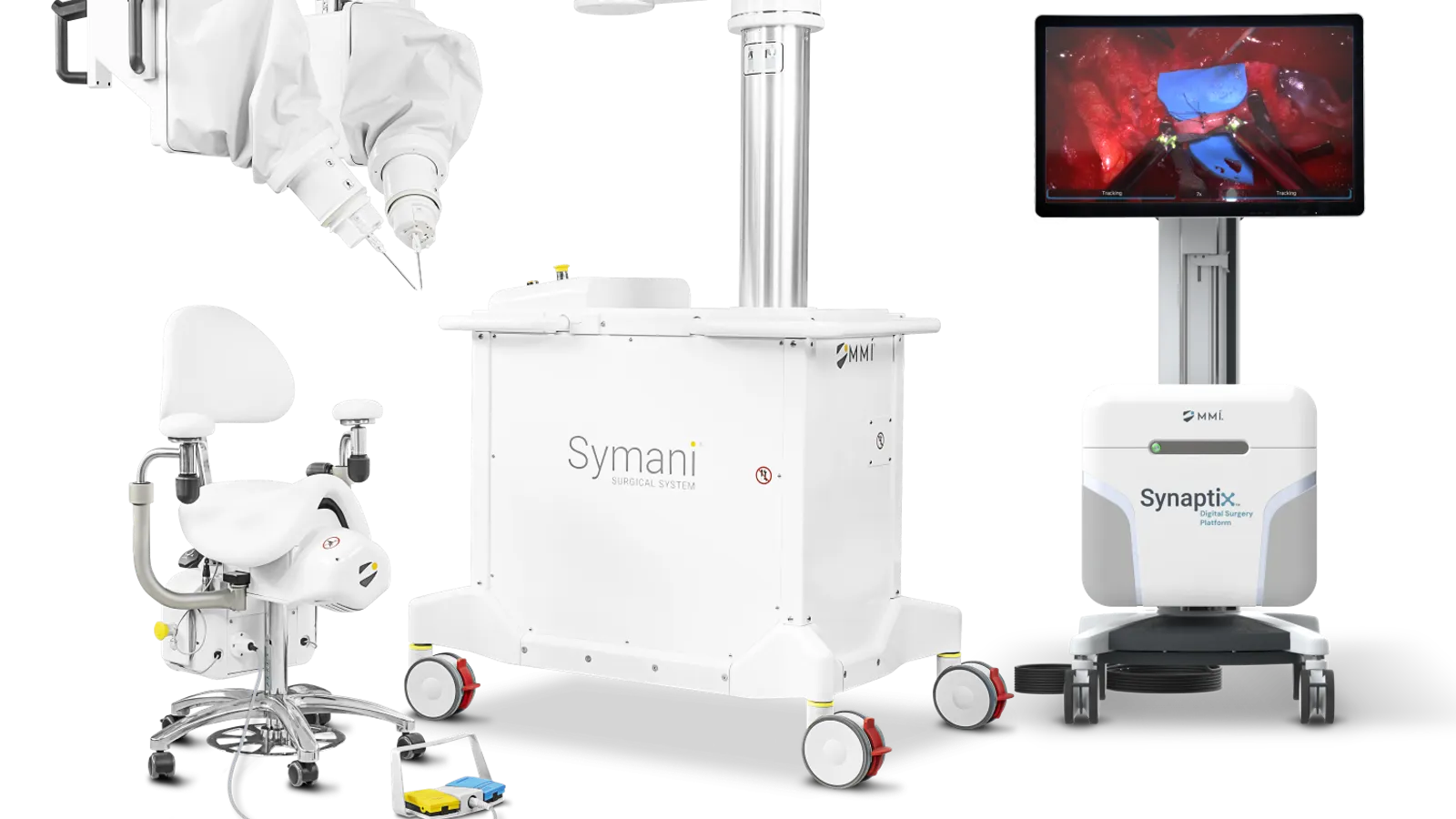
The Symani surgical robot maker said the financing will help broaden adoption of the system in the U.S. and global markets and support a clinical trial for Alzheimer’s disease.

The CFO transition is part of a recent wave of leadership changes at Henry Schein, including a new CEO.

Fitzgerald will oversee three newly established reportable segments as Boston Scientific works to bounce back from guidance cuts.

Kurz’s appointment comes as Medtronic enjoys strong growth in electrophysiology therapies thanks to demand for its pulsed field ablation devices.

The Medicines and Healthcare Products Regulatory Agency adopted 44 recommendations, including a call for AI-enabled devices to be monitored throughout their working life.

Patients can view their pulmonary artery pressure readings on their phone with the CardioMEMS updates, giving them a more active role in their care.

A U.S. district court ruled that Apple owes prejudgment interest on the $634 million in damages it incurred for infringing Masimo’s pulse oximetry patent.

Cook Medical has become Zenflow’s U.S. distributor in a urology device market targeted by Boston Scientific, Olympus and Teleflex.

The MedTech Intelligence Industry Survey is a primary research initiative designed to capture the perspectives of professionals working across the medical technology sector. The study is intended to examine the pressures, priorities, technology shifts, operational challenges, and strategic changes influencing MedTech organizations in 2026. The post MedTech Intelligence Industry Survey Research Methodology appeared first on MedTech Intelligence.
How MedTech manufacturers can move cybersecurity upstream, strengthen traceability, and prepare for faster vulnerability response. The post Cybersecurity by Design: Building Traceable Execution Across the MedTech Lifecycle appeared first on MedTech Intelligence.
Reverse engineering carries a reputation problem in medical device circles; it sounds like copying. In practice, it's a legitimate engineering discipline with specific, defensible use cases: replacing obsolete components, improving an existing design's manufacturability, and indigenizing imported parts. This article looks at when reverse engineering genuinely makes sense in medical device development, the technical process involved, and the intellectual property considerations teams need to navigate before using it. The post Reverse Engineering in Medical Device Design: When and Why It Makes Sense appeared first on MedTech Intelligence.
Complaint volumes have outgrown manual triage, and medical device companies are turning to AI to keep up. The speed gains are real, but used carelessly the same tools can bury a reportable event at the bottom of a queue while the MDR clock runs. This piece maps where AI genuinely helps in post-market surveillance, where human judgment has to stay, and what validation, monitoring, and audit trails a defensible program needs. It is grounded in the current regulatory frame, including the QMSR and FDA's new inspection program (CP 7382.850) that took effect February 2, 2026, 21 CFR Part 803 reporting timelines, and ISO 13485 software validation expectations. It includes a practical table drawing the line between tasks that are safe to automate and decisions that must stay human-owned. The intended audience is quality, regulatory, and post-market surveillance professionals in the medical device industry. The post AI-Assisted Triage: Accelerating Post-Market Surveillance While Eliminating Reporting Blind Spots appeared first on MedTech Intelligence.
As healthcare shifts towards remote monitoring, connected devices and decentralized care, sensor technologies are becoming increasingly foundational to how medical devices collect, validate and transmit critical information. From remote patient monitoring and at-home care to connected medical devices and robotic-assisted surgery, sensing technologies can help enable earlier detection, more reliable clinical data and better-informed decision making. The post Sensors at the Edge: Powering Smarter Healthcare appeared first on MedTech Intelligence.

According to Deloitte, only 22% of life sciences leaders say they have successfully scaled AI, and just 9% report achieving significant returns. For materiovigilance, this highlights the growing gap between execution and team expectations. Within this gap, fragmented data and manual processes continue to slow response times and increase compliance risk, creating a disconnect between the promise of real-time safety monitoring and operational reality. How can organizations close this execution gap and evolve materiovigilance from a reactive compliance function into a proactive, data-driven discipline? The post Devices are Getting Smarter, Making Materiovigilance Evolve Faster appeared first on MedTech Intelligence.
GenAI-enabled medical devices hold transformative promise for patient care and the broader health ecosystem. At the same time, these devices may introduce unique risks when compared to traditional software and AI-enabled medical devices. The post FDA Seeks Public Feedback to Inform Regulatory Approach for Generative AI-Enabled Medical Devices appeared first on MedTech Intelligence.
What 524B and QMSR actually require, in plain terms, including the post-market obligation that does not end at clearance? How both map to four kinds of exposure: cybersecurity, product liability, recall, and management liability. Where device makers are commonly unprepared against the new baseline, including the gap between cyber risk and product liability for software and devices. The post What 524B and QMSR Change About Medical Device Risk appeared first on MedTech Intelligence.
The increased digitalization of medical device manufacturing makes lean practices more applicable than ever. Keep these factors in mind to put them into action. The post Taking Lean Manufacturing to the Next Level appeared first on MedTech Intelligence.
A MedTech survey revealed that most sales teams are not using AI for strategic purposes, such as identifying opportunities, prioritizing accounts, or research. Instead, AI is mostly deployed to complete administrative tasks, such as drafting emails and summarizing meetings. Why is more needed? The post Why Few MedTech Sales Teams Are Using AI Where It Matters Most appeared first on MedTech Intelligence.
Chris Whitehouse, a political consultant and expert on medical technology policy and regulation at Whitehouse Communications, and a Trustee of the Bios Centre for bioethics updates readers on expansion of the services available through the NHS app. Millions of people across England can now get an alert on their smartwatch or mobile when their prescription [...] The post NHS expands ‘prescription ready’ service to smartwatches and mobiles appeared first on Med-Tech Insights.
Women struggling to secure answers for suspected endometriosis and PMOS could be given stronger evidence of their symptoms through wearable technology shaped by its founder’s own lived experience. WombWise, founded by Edinburgh Napier University graduate Emily Youngs, has been crowned winner of the Create Change Challenge at the Converge Awards. Her innovative digital health platform [...] The post Wearable tech gives women ‘proof their pain is real’ appeared first on Med-Tech Insights.
Ensera has launched the Ensera Alliance Network, bringing together leading device platform and fill-finish specialists to address the complexity of commercialising drug-device combination products. The network currently includes injector platform providers SHL Medical, Stevanato Group and Ypsomed alongside fill-finish specialists Argonaut Manufacturing Services, and American Injectables. Bringing a combination product to market often requires pharmaceutical [...] The post Ensera launches alliance network with SHL Medical, Stevanato Group, Ypsomed, Argonaut and American Injectables appeared first on Med-Tech Insights.
A new approach to sharing diagnostic images captured by doctors at the point of care is informing time-critical decisions for some of the most unwell babies in hospital with patients in emergency and intensive care settings set to benefit next. Developed in partnership between Portsmouth Hospitals University NHS Trust (PHU) and international medical imaging IT [...] The post Intensive care babies first to benefit from new way of sharing point of care scans appeared first on Med-Tech Insights.
The NHS MyCare.scot App, Scotland’s answer to the English NHS app, has been downloaded by only 22,206 people since being launched in June, according to new figures obtained by the Mail on Sunday. The development of the Scottish version of the NHS app has cost £17 million but has been downloaded by approximately 0.5% of [...] The post Low uptake for Scottish NHS app draws criticism amid debates about scalability appeared first on Med-Tech Insights.
New report from the Medical Technology Group calls for patient organisations to be more closely involved in commissioning decisions and for ICBs to open transparent routes for industry engagement A new report from the Medical Technology Group has called on Integrated Care Boards to draw more systematically on the expertise of patient organisations and life [...] The post Patient Groups and Industry Experts Underused in Local NHS Commissioning, Warns MTG Report appeared first on Med-Tech Insights.
PRECISIS, a medical technology company developing targeted neuromodulation therapies, has been selected to receive the EIB Innovation Champion Award at the TechEU Equity Summit in Luxembourg. The award recognises PRECISIS as one of Europe’s innovative companies developing new technologies and solutions with the potential to make a meaningful difference to people’s lives. PRECISIS’ lead product, [...] The post European Investment Bank Recognises PRECISIS for Innovation in Neurotechnology and Epilepsy Treatment appeared first on Med-Tech Insights.
LabVantage Solutions, Inc., a leading global provider of laboratory informatics solutions and services, has been named a Visionary Leader in two 2026 Frost Radar reports by Frost & Sullivan: Frost Radar: Life Sciences Laboratory Information Management Systems, 2026 and Frost Radar: Laboratory Information Management Systems in Industrial Applications, 2026. Announced at LabVantage’s Customer Training and [...] The post LabVantage Named Visionary Leader in Life Sciences and Industrial LIMS appeared first on Med-Tech Insights.
MED-EL, a global leader in hearing implant technology, has announced the launch of TICI UNICO, a device that the company claims is the world’s first and only commercially available totally invisible cochlear implant. Designed for people with severe-to-profound sensorineural hearing loss, MED-EL says the TICI UNICO provides around-the-clock access to sound through a fully implanted [...] The post MED-EL Launches World’s First Invisible Cochlear Implant appeared first on Med-Tech Insights.
Executives, digital, operational, and frontline staff from the newly integrated North Cheshire and Mersey NHS Foundation Trust, will welcome both big tech and innovative health tech firms on 27 November. The trust, which integrated in April, is the latest in the NHS to host Elevate, a programme of health tech showcases that bring curated and [...] The post Tech Firms to Engage NHS Workforce in Newly Integrated NHS Trust appeared first on Med-Tech Insights.
Your Security Stack Is Working. Are Your Security Operations? jordan.scott_xWTB Fri, 10/09/2026 - 10:25 Walk into a modern enterprise security operations center today, and you'll discover just how inexpensive 65-inch monitors are: The walls are covered with them, showing dashboards from security information and event management (SIEM) consoles, extended detection and response (XDR) endpoint security platforms, firewall intrusion prevention systems (IPS) and data loss protection software. It's all very impressive and mission-control. Yet breaches still occur. And after the worst of them, the postmortem is almost always a variation of the same story. Yes, the alert was received. The log clearly showed the problem. The vulnerability was advertised and known. But the organization still failed to respond in time, the ransomware proliferated, the data was exfiltrated, and the hackers were able to move around the network without being stopped. The security industry makes it easy to buy product. There’s always a new acronym or next generation or amazing AI-powered breakthrough. But products only generate signal; they keep those snazzy monitors flashing. It’s the people and processes in a SOC that convert that signal into actionable intelligence and threat mitigation to protect patients and the health system. If your threat hunters are falling behind, you are more likely need to invest in your operational framework than to buy a new license. Click on the banner below to learn more about how IT leaders are tackling newer cyber risks. Joel Snyder
How a Healthcare IT Endpoint Refresh Improves Cost and Asset Management jordan.scott_xWTB Tue, 10/06/2026 - 10:20 Many healthcare IT teams treat an endpoint refresh like a chore: They replace aging devices including laptops and tablets, check the box and move on. But a large-scale hardware rollout — especially one driven by a deadline, such as the shift to Windows 11 — also presents an opportunity for healthcare organizations to fix problems that may have been costing them money and creating security risks for years. A strategic approach toward refreshing endpoints and managing them over the long term delivers numerous benefits. Swapping out old technology for new devices is the easy part. The real opportunity is everything a refresh can reveal — and fix — around cost, visibility and clinical workflows. Click the banner below to learn how clinical workflow redesign drives healthcare optimization. Jonathan Karl
Healthcare IT Leaders Seek a New North Star in the Age of AI jordan.scott_xWTB Mon, 10/05/2026 - 11:15 Healthcare IT leaders are the midst of an identity crisis. Long seen as back-office superheroes, some IT leaders now find themselves expected to serve as innovators, evangelists and even the “fun people.” “I didn’t know that we were the fun people, man. Like, I was supposed to do one thing, now I have to worry about if it’s fun or not?” said Carollo Engineers CIO Andrew Ivey to his fellow panelist, St. Luke’s University Health Network Associate CISO Krista Arndt. The two were having an introspective but casual discussion about how they were responding to all of the changes in the workplace and IT — especially those wrought by artificial intelligence (AI). But the setup for this conference conversation was different. The panel, which took place onstage during the 2026 CDW Summit in Dallas, had a podcast aesthetic to it and it was dubbed “CDW OTR (On the Record).” The two had big podcast mics in front of them, and Arndt was dressed casually and sitting cross-legged on the couch. This could have been a conversation livestreaming from YouTube or Twitch. Click the banner below to power employee productivity with AI. Ricky Ribeiro
Why Virtual Care Is Becoming an Integral Part of Nursing Education jordan.scott_xWTB Thu, 10/01/2026 - 04:07 As virtual nursing continues to develop across U.S. health systems, training the next generation on this growing care delivery model has become a priority for Rutgers School of Nursing. Through a Caregility partnership, the school is bringing training for virtual nursing enabled by artificial intelligence into its undergraduate program to prepare students for workflows now used in highly connected patient rooms, tele-intensive care and hospital-at-home programs. “Virtual nursing has been out there for the past 30 years,” says Angela Starkweather, dean and professor at the Rutgers School of Nursing. As the care delivery model becomes more capable and expands into new settings, she says, nurses require competencies leveraging virtual care to improve clinical outcomes. Click the banner below to create connected care workflows that improve healthcare experiences. Nathan Eddy
Healthcare Organizations Must Brave the New World of Cyberthreats With AI jordan.scott_xWTB Wed, 09/30/2026 - 10:46 Artificial intelligence models are evolving at a rapid clip. In a post–Claude Mythos Preview and GPT-5.5 environment, that means capabilities that could massively reduce the time and skill needed to carry out sophisticated cyberattacks are becoming more accessible than ever. For organizations across industries, traditional approaches to cybersecurity are inadequate in keeping up with this ever-changing threat landscape. In a survey of 951 IT decision-makers, CDW found that AI represents both a significant threat and a powerful tool in cybersecurity. In fact, 43% of respondents said they had experienced AI-enhanced or AI-generated phishing attacks, while 37% said they faced AI-powered malware. Click on the banner below to learn more about how IT leaders are tackling newer cyber risks. CDW Staff
Instead of Models and GPUs, Focus on the Right Workloads for AI jordan.scott_xWTB Tue, 09/29/2026 - 10:36 The healthcare use cases for artificial intelligence continue to expand, from improving diagnostics for rare diseases to integrations with critical applications that ease clinical documentation burdens. In connection to AI and data governance, much of the focus has been on which models are appropriate or the right number of graphics processing units, but the underlying issue is really whether organizations are ready to support and secure AI workloads. “Local computing, networking, security — all those elements are part of a hospital’s infrastructure that is leveraging AI as a normal course of business, not as a sidecar,” says Jeremy Foster, senior vice president and general manager of compute at Cisco. “Making sure the right workloads are relying on AI becomes an integral question.” He chats with HealthTech about why most providers haven’t yet built out their systems for long-term AI use and where the focus needs to shift so that organizations can be ready for the future. Click the banner below to learn how clinical workflow redesign drives healthcare optimization. Teta Alim
How Healthcare IT Teams Can Run EHR Optimization as a Continuous Cycle jordan.scott_xWTB Thu, 09/24/2026 - 10:44 Mergers and acquisitions (M&A) have become a regular part of healthcare headlines, and when organizations join together, their application portfolios join too. Shared electronic health records systems (such as Epic, Oracle Health and MEDITECH) have a similar effect: Larger organizations extend their EHR to smaller hospitals and clinics that would not have the budget or in-house teams to deploy such a system on their own. Extending a system carries many of the same implications as an acquisition. In both cases, a group of users inherits an instance they did not design, along with its inefficiencies. Underlying both is the same need: to treat EHR optimization and workflow redesign as ongoing work, with an owner and a cadence, so that provider and patient experience keep improving after go-live. Click the banner below to learn how clinical workflow redesign drives healthcare optimization. Jeff Kula Dr. Sonny Hyare
Mergers and Acquisitions: An Overview of Notable Healthcare M&A Activity in 2026 jordan.scott_xWTB Wed, 09/23/2026 - 11:19 Mergers and acquisitions are off to a strong start in 2026. According to Kaufman Hall, there were more transactions in Q1 2026 than in any of the previous five Q1 results. That pace continued into Q2 2026, when the industry saw the highest Q2 M&A levels since 2019. Healthcare organizations are continuing to engage in M&As as a strategy to expand care access and bolster stability amid increasing economic pressures. Many of the deals were between hospitals and regional health systems. Click the banner below to sign up for HealthTech’s weekly newsletter. Jordan Scott
Clinical Care Resilience Planning Is Not a Passive Act jordan.scott_xWTB Tue, 09/22/2026 - 10:19 Downtime in a hospital can happen for a number of reasons: Sometimes, it’s scheduled, and care teams received enough warning to plan for it. Other times, it can be an unplanned IT outage or an actual system disruption from a cyberattack, a third-party dependency being unavailable or a natural disaster. Whatever the case, healthcare organizations must be prepared to stay operational during downtime. Otherwise, they could face serious patient care and financial setbacks that can shutter entire facilities. Clinical care resilience must therefore be as active and deeply ingrained as any other policy that supports uninterrupted care delivery. It can’t be emergency planning kept in a binder, dusted off annually to meet compliance checks. It can’t be limited to discussions and roleplay. Tabletop exercises don’t account for stress. When I served as a healthcare CIO, I once let my leadership team know we were going to need to take the electronic health record (EHR) system offline for 72 hours for maintenance. Of course, I received immediate pushback. But it caught their attention: If our organization couldn’t survive three days without its most critical application, how could we provide care for a longer downtime? The answer should not only be applied throughout a health system but should also have department-specific approaches. DISCOVER: Ensure healthcare business continuity when IT fails. Clinical Care Resilience Starts With a Thorough Assessment Healthcare IT should work as seamlessly as any utility, like electricity: It’s expected to work without much thought. Unfortunately, with today’s changing cyberthreat environment and other operational uncertainties, organizations must be more willing to think about what happens when things don’t work quite as expected. At CDW, we offer a free tool that healthcare organizations can use to review every clinical and business unit — from primary care and the emergency department to the pharmacy and billings department — that asks how long each team can provide its necessary clinical or business function without any technology. These are nontechnical conversations that allow us to understand downtime in real terms that affect how a nurse, a billing specialist or a pharmacist can (or cannot) do their jobs when a critical application or device doesn’t work. It’s also important to plan differently for downtime duration. Instead of framing it as “what do we do when a system is down” it needs to be considered in two parts: the duration and its specific impact. Downtime that happens for an hour in the pharmacy department has different implications than downtime that happens for four hours or across shifts. Even fractional downtime has its own considerations. If the pharmacy has PCs that are offline, even though the EHR system remains functional, the orders that clinicians are putting in may not be going through, which can have a negative impact and could have snowballing operational consequences. That’s why reviewing plans for each department and aligning them to organizational policy will help improve overall resilience. Click on the banner below to learn more about how IT leaders are tackling newer cyber risks. Eli Tarlow
Real-Time Analytics at the Edge: Enabling Faster Clinical Decisions at the Point of Care jordan.scott_xWTB Wed, 09/16/2026 - 15:45 Clinical decisions can’t wait for batch analytics. Edge computing, real-time data streaming and artificial intelligence (AI) inference at the point of care bring intelligent analysis to the bedside — enabling faster sepsis detection, deterioration alerts and treatment optimization, among many other uses. “These technologies bring useful insights right where patients are being diagnosed or tested,” says Romina Hipolito, chief nursing informatics officer at Dell Technologies. While there are many benefits and use cases for edge computing in healthcare, it’s important that organizations understand how to lay the foundation for successful implementation. DISCOVER: Get expert insights to harness the power of data at the edge. Clinical Analytics Challenges and the Benefits of Edge Computing Clinical analytics relies on data. Fortunately, healthcare organizations now generate an abundance of data. The challenge, however, is that all of that data comes from many different sources, such as imaging machines, lab results and electronic health records, and in many different formats. “So, it’s harder to garner insights because of all of the variability in the data,” Hipolito says. By contrast, edge computing technologies, such as mobile imaging machines, gather and process data in real time on a bedside device or on-premises server, closer to the data source. Edge computing provides insights at the point of care and supports swift decision-making — all while reducing latency, conserving bandwidth and protecting sensitive patient information. “Edge computing gives insights to clinicians as quickly as possible so they can make decisions as quickly as possible,” Hipolito says. “Faster insights and access to the data mean faster diagnoses and treatments, helping optimize how we deliver care.” Speedier care also can help boost patient satisfaction, she adds. “Nobody wants to be in the hospital longer than they need to be.” And the benefits of faster, more personalized care extend beyond greater convenience and efficiency, Hipolito notes. “In healthcare, having the right insight at the right time and place could mean life and death.” Click the banner below to find out how to take advantage of data and AI for better healthcare outcomes. Novid Parsi

A practical readiness checklist for Epic electronic prior authorization, covering payer connectivity, data quality, exception workflows, staffing, and metrics.

SVP of Continuous Managed Services at Healthcare IT Leaders recognized for vendor-agnostic health IT support and division growth OVERLAND PARK, KS. – October 8, 2026 – Healthcare IT Leaders, a national leader in IT consulting, managed services and workforce solutions, announced today that Jody Buchman, MBA/MIS, Senior Vice President of Continuous Managed Services, has been

A practical readiness checklist for Epic electronic prior authorization, covering payer connectivity, data quality, exception workflows, staffing, and metrics.
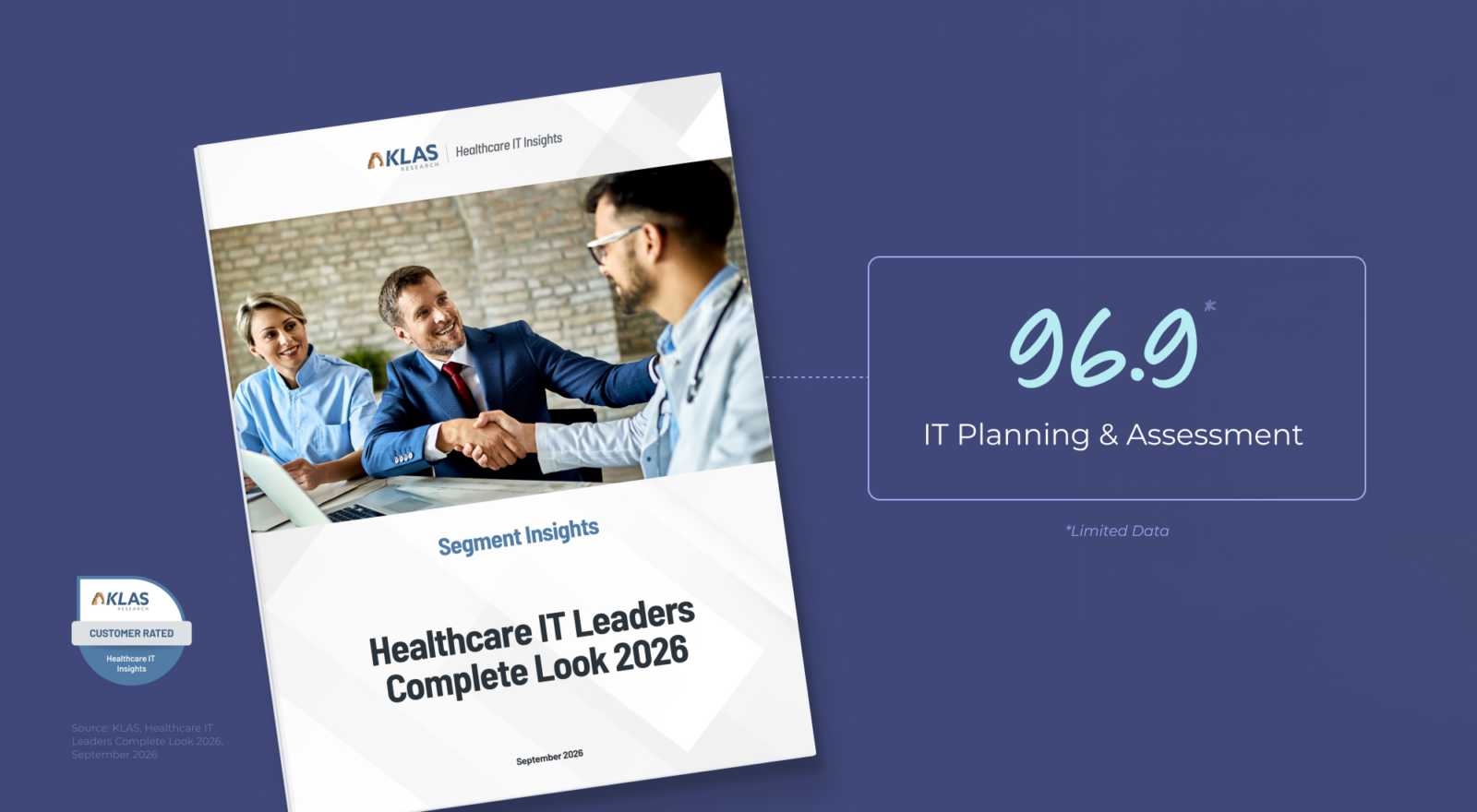
Explore a CIO’s feedback on managed IT services in Healthcare IT Leaders Complete Look 2026. KLAS Research published the report in September 2026.
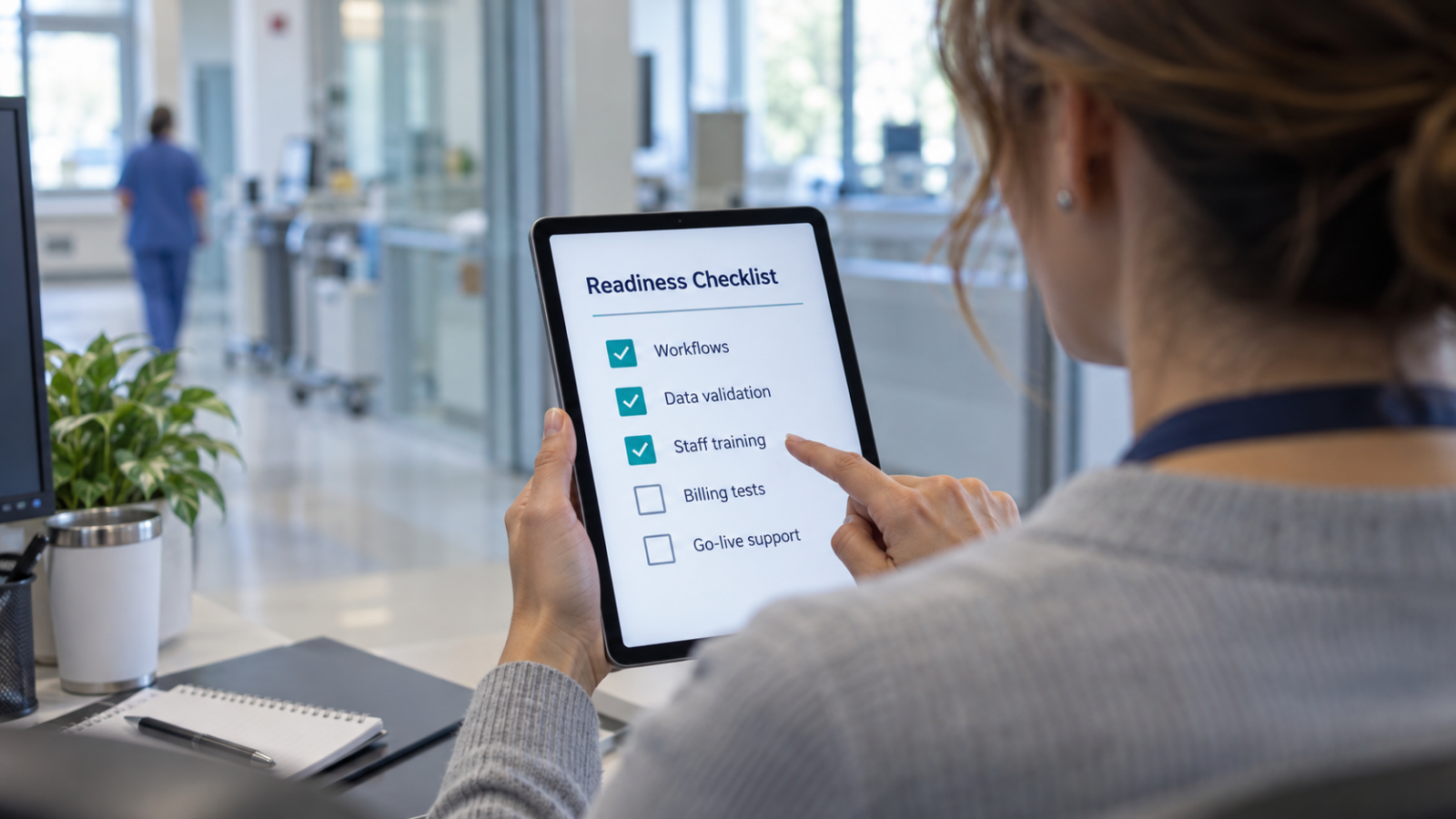
Prepare for Oracle Health Patient Accounting with a practical checklist covering data quality, testing, staffing, legacy receivables, and go-live support.
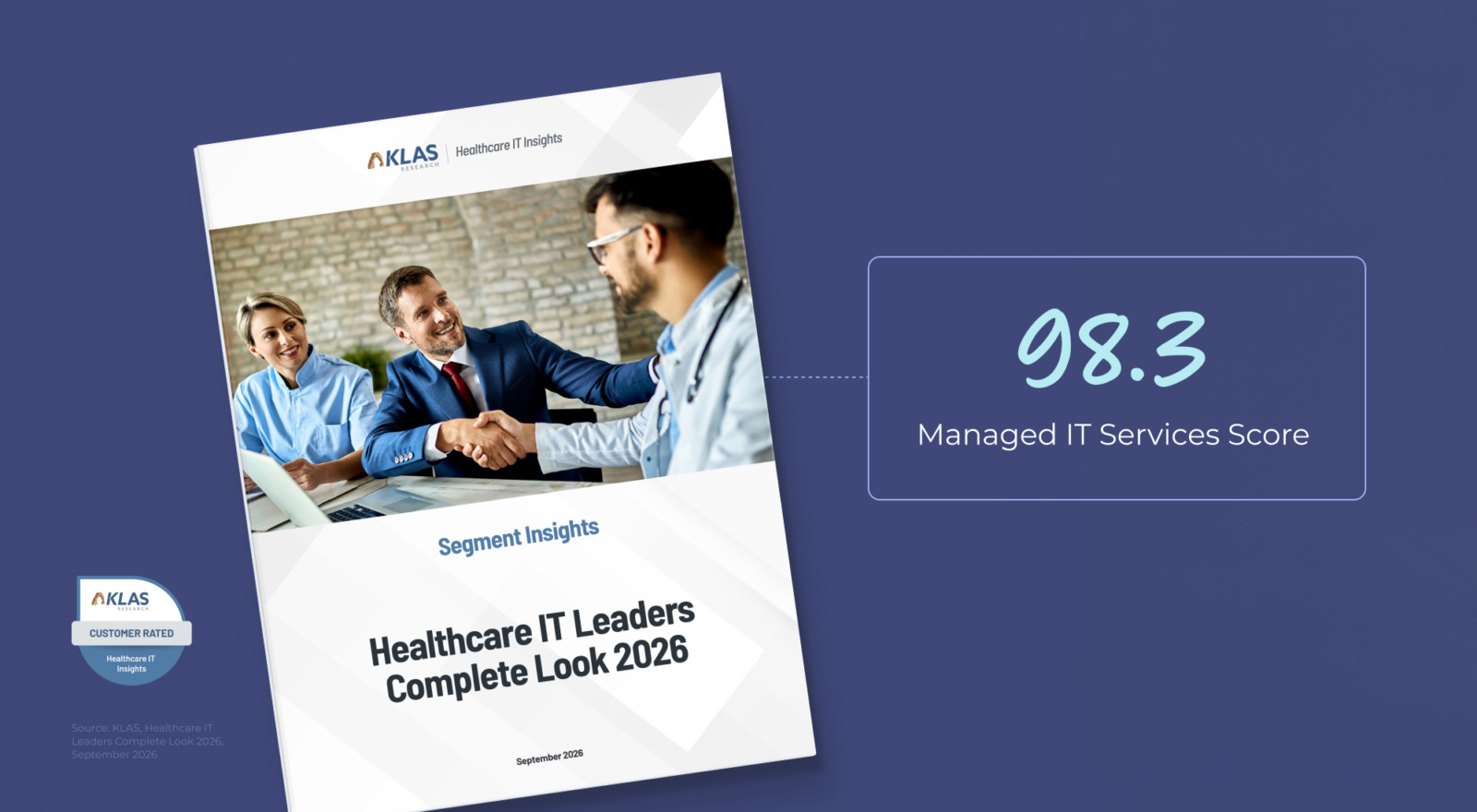
Explore a CIO’s feedback on managed IT services in Healthcare IT Leaders Complete Look 2026. KLAS Research published the report in September 2026.
Survey of client health systems yields a 98.3 managed IT services score, underscoring partnership, experience and execution across EHR and ERP engagements. KANSAS CITY, KS. – September 15, 2026 – Healthcare IT Leaders, a national leader in IT consulting, managed services and workforce solutions, today announced findings from the Healthcare IT Leaders Complete Look 2026
Kyndryl completes acquisition of Healthcare IT Leaders, LLC The acquisition strengthens Kyndryl’s ability to help healthcare providers and payors modernize mission-critical technology environments by combining Healthcare IT Leaders’ healthcare consulting and application managed services expertise with Kyndryl’s infrastructure and AI capabilities. Read the full Press Release on Kyndryl.com This follows the original announcement on August

Cerner HealtheIntent was the name of a cloud-based population health and data platform. Current Oracle materials use Oracle Health Data Intelligence. The older HealtheIntent name remains familiar to many healthcare teams. The platform brings together clinical, claims, pharmacy, social, and other data. Teams can use that information to create longitudinal records and support analytics. It
Advanced scheduling helps healthcare organizations match staffing to expected demand, required skills, labor rules, employee availability, and operational priorities. A basic calendar or spreadsheet records the schedule. An advanced process uses workforce data and defined rules to help managers build it and respond when conditions change. In a hospital, a scheduling decision can affect labor